
 CALL US: (541) 472-8111
SSI Altitude Diving
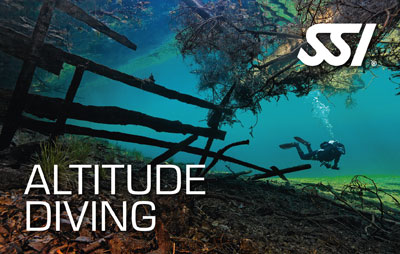
High mountain lakes and reservoirs can offer incredible visibility, unique scenery, and quiet dive sites—but they also require special planning. The SSI Altitude Diving Specialty teaches you how to adjust your dive plans safely when you are diving well above sea level.
In this course you will learn how altitude affects pressure, no-decompression limits, and surface intervals, and how to use altitude-adjusted tables or dive computers correctly. You’ll also review equipment considerations, emergency procedures, and practical techniques for diving in remote or cooler environments.
After completing the Altitude Diving Specialty with Coral Sea Scuba, you’ll be able to explore high-elevation dive sites with confidence and integrate those dives into your overall logbook and advanced training goals.
View Upcoming Class Dates Contact Us Call or Text (541) 472-8111
Scuba Diving Courses & Specialty Training
- Open Water Diver
- Specialty Diver
- Advanced Open Diver
- Diver Stress & Rescue
- Master Diver
- Specialty Programs
- Emergency Training
- React Right
- Altitude Diving
- Classified Diver
- Dry Suit Diving
- Equipment Techniques
- Full Face Mask
- Perfect Buoyancy
- River Diving
- Science of Diving
- Spearfishing Safety
- Underwater Communication
 Boat Diving
- Computer Diving
- Deep Diving
- Digital Underwater Photography
- Dive Guide / Divemaster
- DPV Diving
- Enriched Air Nitrox Diving
- Navigation
- Night / Limited Visibility
- Search and Recovery
- Waves, Tides & Currents
- Wreck Diving
Frequently Asked Questions
What counts as altitude diving?
Any dive in a body of water located significantly above sea level can be considered altitude diving. This course focuses on safely planning dives in high mountain lakes and similar environments.
Why is altitude different from sea-level diving?
At higher altitudes, atmospheric pressure is lower. This changes how your body absorbs and releases nitrogen, which affects no-decompression limits, surface intervals, and ascent procedures.
What will I learn in this course?
You’ll learn how to adjust your dive planning for altitude, use altitude-corrected tables or dive computers, choose appropriate equipment, and manage safety stops and emergency procedures for mountain lake dives.
Do I need special equipment?
Many standard scuba setups can be used at altitude, but you may need exposure protection for cooler water and to ensure your regulator and instruments are suitable for the conditions. Your instructor will review specific recommendations.
Does this course count toward advanced ratings?
Yes. The SSI Altitude Diving Specialty counts toward advanced recognition levels such as Specialty Diver, Advanced Open Diver, and Master Diver.
What are the prerequisites?
You should be a certified Open Water Diver or equivalent. Recent cold-water or local diving experience is helpful but not required.
Notify Me About Upcoming Classes